Project Description
In late December 2025 I was awarded a community artist residency with glór for 2026. This was a very special opportunity for me for a number of reasons. As a family carer myself, I am generally not in a position to apply for and take up artist residencies- as these involve traveling and residing elsewhere for a period of time more to work on your practice, which, as a carer and parent needed at home each day, I am not able to do. Therefore this residency, located in my local area, that allows for the time and space to develop, experiment, and foster relations with members of the community is for me, a huge and exciting opportunity.
For the residency I am working with a number of local community-based groups to produce a new body of work to highlight the lived experiences of two groups: people living with disabilities and family carers in contemporary Ireland.
The goal of the project is to use experimental drawing as a tool to discuss and communicate hard topics, to learn about each other and how we can facilitate a better lived environment for all, using the power of visual art to communicate issues and challenges in an impactful way.
Why drawing? Drawing is deeply democratic- you just need something to draw with and something to draw on. Everyone can draw. If you can hold a mark making tool and press it down onto some sort of surface then you can draw. Drawing transcends language. You don’t need expensive tools. It retrains the brain in how you think. I have a long standing drawing practice and I believe in its power as a tool to unify and to spawn creative ways of thinking.
Part of the residency is facilitating drawing workshops and discussions regularly in glór and off-site with the following groups:
Clare Leader Forum – a Disabled Persons Organisation (DPO) run by Disabled People for Disabled People in County Clare.
Clare Crusaders Children’s Clinic – who provide free therapy and specialist treatment to over 450 young people with special needs in County Clare.
Family Carers Ireland – a not-for-profit nationwide organisation who support family carers and young carers through the provision of free emergency care planning, counselling, specialised training and education programmes, wellbeing support, crisis management, emergency respite/respite provision, advocacy, peer support groups, information on rights and entitlements and many other worthwhile initiatives.
Why these three groups? As mentioned, I myself am a carer to a family member with a disability. This has afforded me much experience of the endless daily challenges and the structural marginalisation faced by both disabled individuals and carers — ranging from social invisibility to economic undervaluation. I believe these two factions of society are two of the strongest and most resilient out there in their lived experience and the work that they do.
I am also very interested in societal labelling and the ‘othering’ of those with disabilities, and in a similar pattern, general societal assumptions made around carers and the job of caring. I am interested in our western structure of the family, and historically, how society has decided whose job it is to provide which duties within this familial structure. I think this is changing, albeit slowly, as is the notion of what caring and being a carer means, in an ageing society where the idea of providing care is still based around historic cultural values but remains hugely undervalued economically. The questions this raises around who we think should be doing the caring and how those who are being cared for are viewed and valued are interesting and essentially are the crux of the ‘hard topics’ which I mentioned at the top of this page.
So far:
Now in February 2026, I have held 2 workshops in glór with Clare Leader Forum and have been liaising with the great people of Family Carer Ireland- specifically the Ennis office. I also attended a very interesting family carers forum in Kilkee. Regarding Clare Crusaders, Having met with their parents to explain my intentions, I am kicking off the sessions with my young adult group in the Clare Crusaders buildings in Barefield, Co Clare, this coming Saturday.
What I have learned so far about my groups:
Clare Leader Forum: A group of strongly political, opinionated, brave individuals who have a lot to say, who like a laugh and who all have lived experience of being disabled in contemporary Ireland. The main themes that have arisen so far through our sessions is about the ‘othering’ of being disabled- how others treat them- and the economic and political/socio economic challenges of being disabled- like managing disability payments and entitlements.
Family Carers– also a strong, tough bunch of people- really interesting to have heard the stories from those I have met so far- the main challenge at present is availability- they are so busy managing caring and work they have little time for outside projects.
Clare Crusaders– the group I will be working with is mainly 16+ and under 20. They all have intellectual disabilities and the issues raised as important by the Clare Leader Forum- for example how society treats them and the notion of being marginalised- are on the whole, as explained by their parents to me, not issues for them. So I am really looking forward to starting to work with them to see what we come up with.
Below are some photos of the first group session with Clare Leader Forum. They were very warm, friendly and good fun to work with. I really appreciated such a great attendance for our first session.
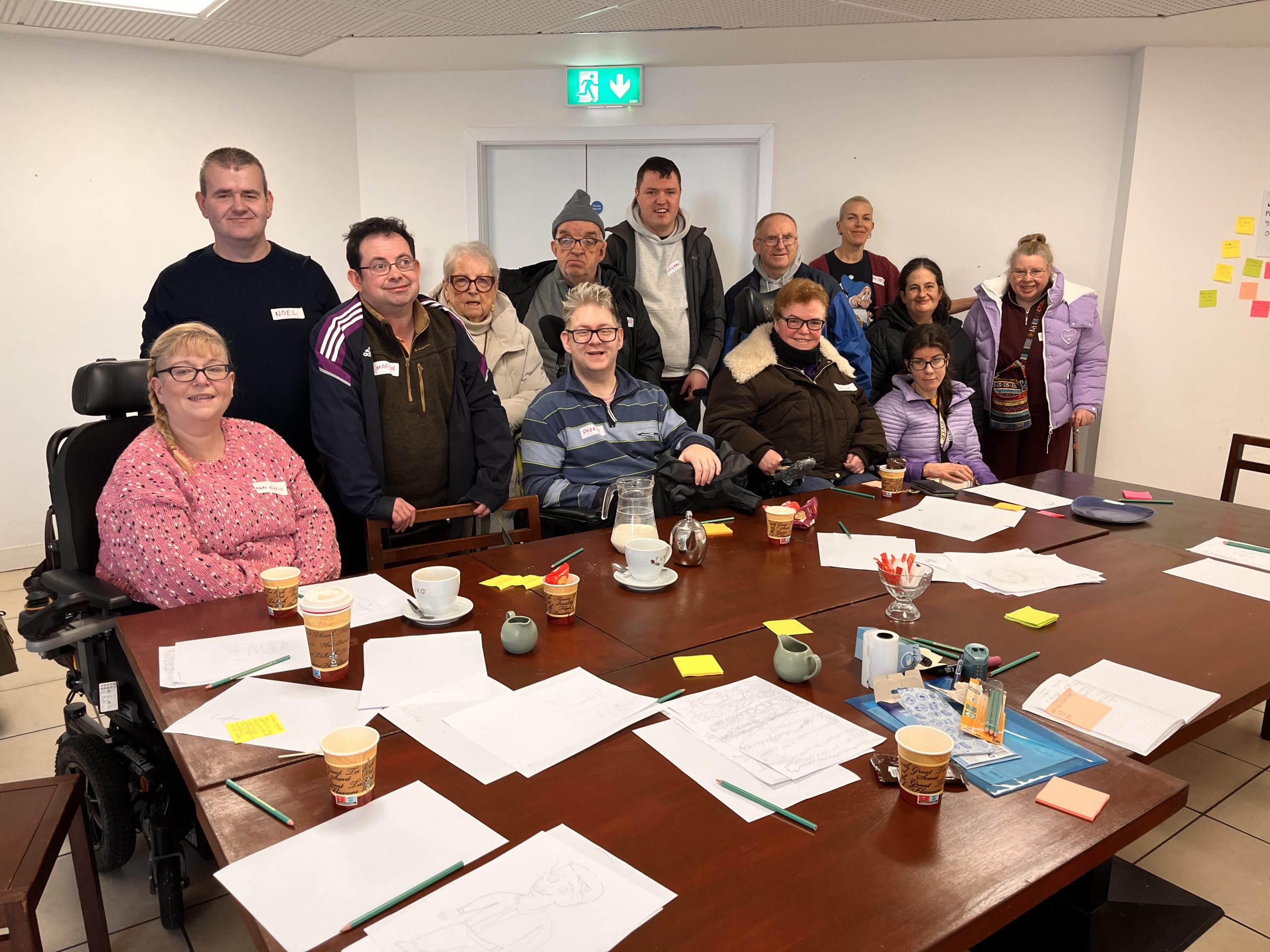
Clare Leader Forum Session 1:
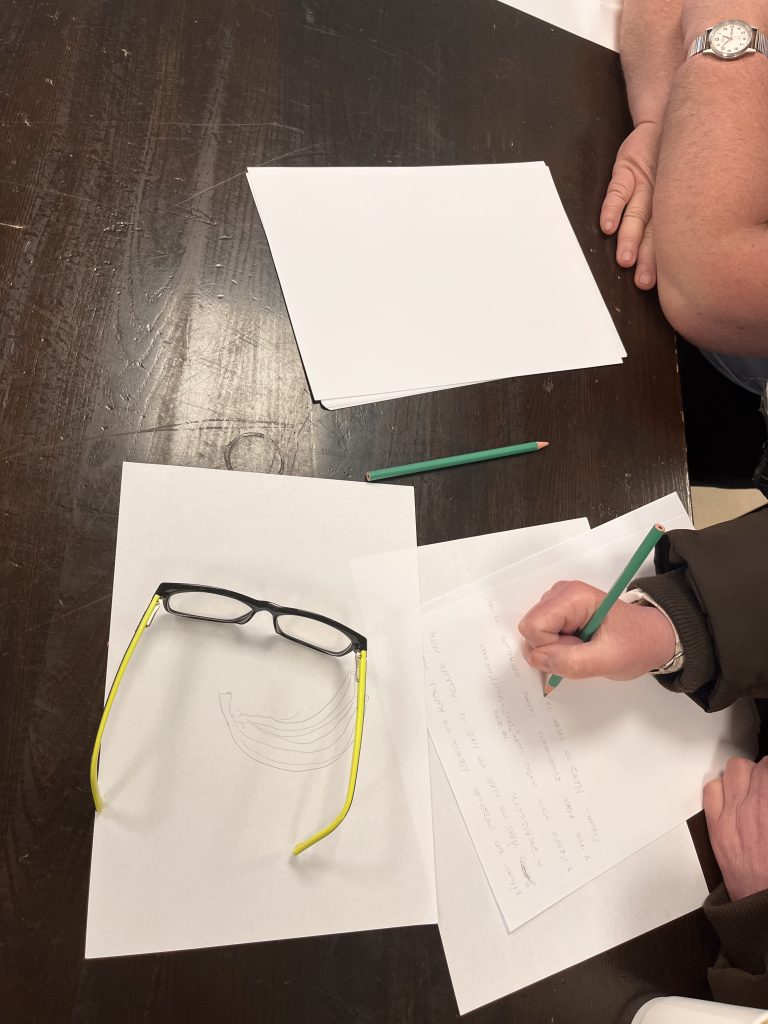
In our first session we did introductions to get to know each other, because as I pointed out, they knew each other but I didn’t know them. After the introductions we started doing some experimental drawing. Due to the loud protestations of not being ‘able’ to draw I renamed the action of drawing as ‘pencil exercises’ and asked them to scribble, loop, circles, zigzag and dot their pages for timed intervals, getting them to warm up both their hands and their brains.After this we did some partner work, including tasking them with drawing their partner but using their non dominant hand. The next exercise was to draw a self portrait, but with your eyes closed. All of this work was with the intention of moving away from perfection and our tendency to focus on the finished product, but rather trying to explore the process. I find people tend to situate their ability to draw around whatever experience they had in school, and whatever value was attached, or rather what value they perceived remembering being bestowed upon them, in terms of their artistic ability at his time. So my first task is always to try and remove this belief. It was the same when I worked as a personal trainer/fitness instructor. If people hadn’t seen themselves as being good at sport in school they usually didn’t see themselves as having any physical prowess as an adult. So many preconceptions to remove!
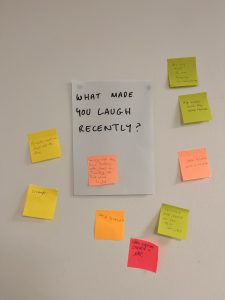
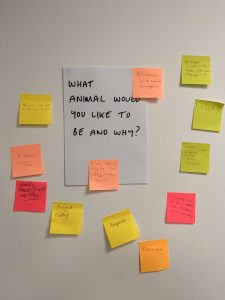
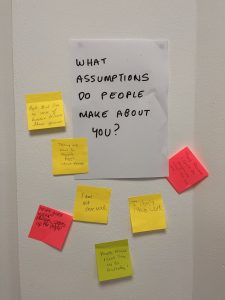
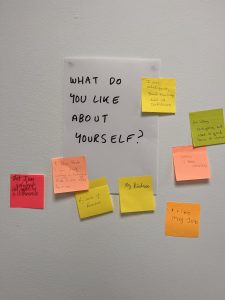
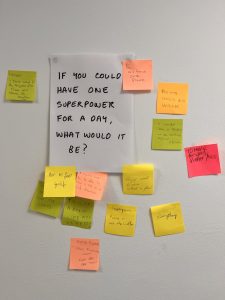
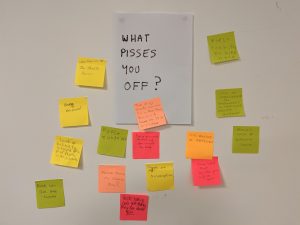
After the exploratory drawing we did an exercise where I put up questions statements on the walls and asked the group to respond to these post-it notes and stick them onto the prompts. I like this methodology as it is quite achievable as a task- post-its are small and not intimidating to fill :) See photos of the primos and post-its bellow. We had just enough time to talk through these and quickly discuss before the session finished. It was powerful exercise and helped me understand on a more expansive level some of the main feelings the group have.
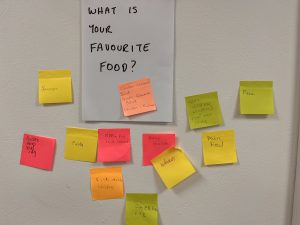
Clare Leader Forum Session 2:
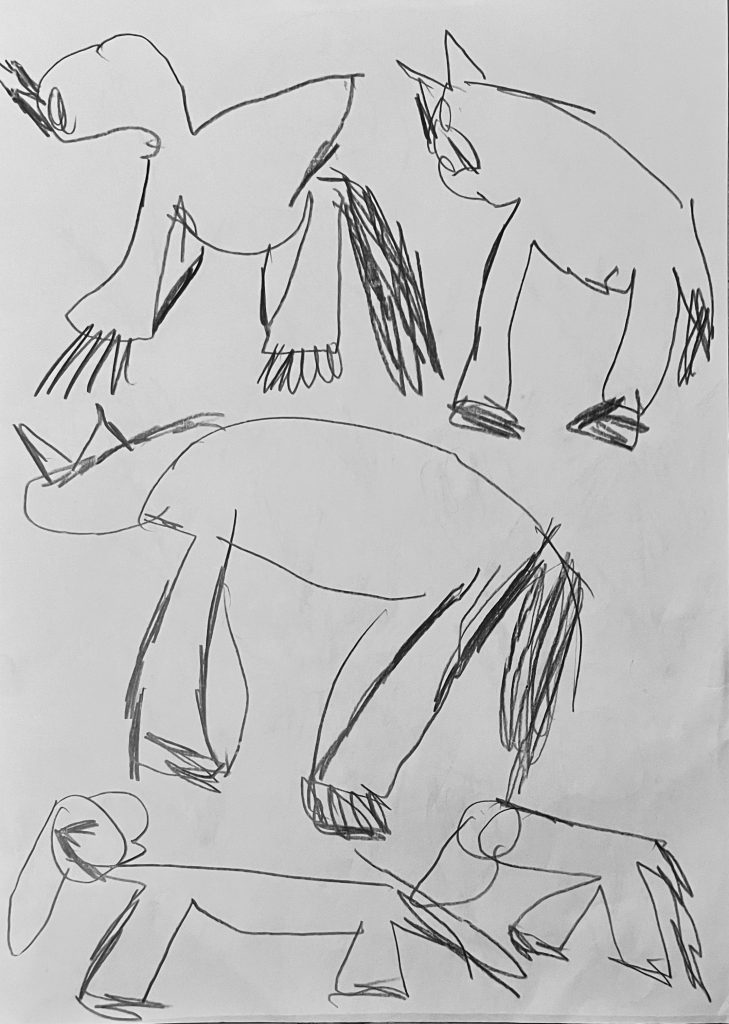
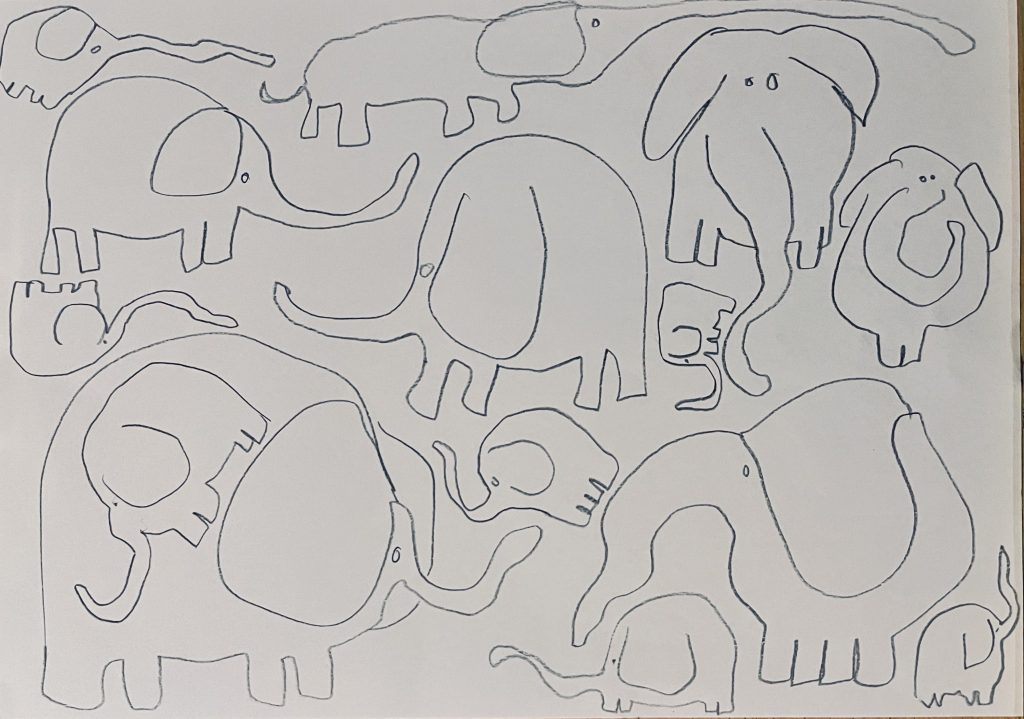
We, as in myself and the Clare Leader Forum, met again a couple of weeks later. It was an absolutely manky morning, heavy rain, so I was delighted that anyone showed up. We had 6 attendees this time and after doing a lot of warm up drawing consisting of more loose scribbling, again to stop thinking about perfection, I then asked them to fill their pages over and over with various objects/animals- for example- feet, faces, flowers, elephants. This was fun- the goal was to show that we all approach a task differently and our outcome is also different- here is a perfect example below- lots and lots of elephants- all different, but nonetheless elephants! It was also a clumsy attempt on my part to visually address the topic of representation- we all appear outwardly different but our commonality is that we are all humans on planet earth. I enjoyed the different elephants very much.
-
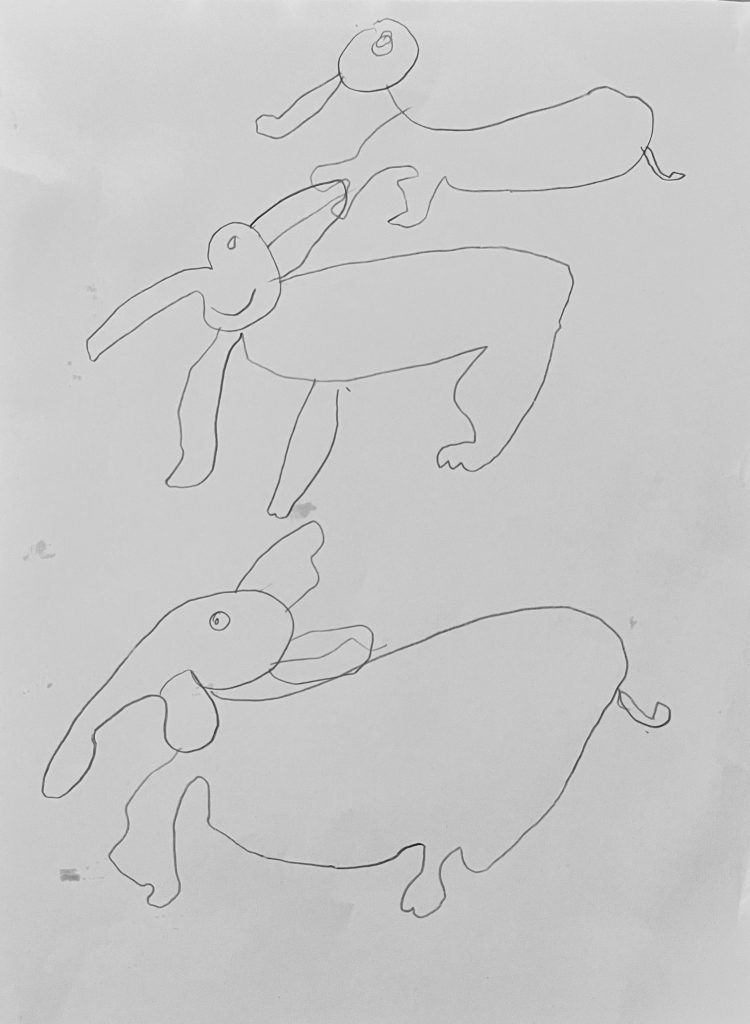
- elephants 2
-
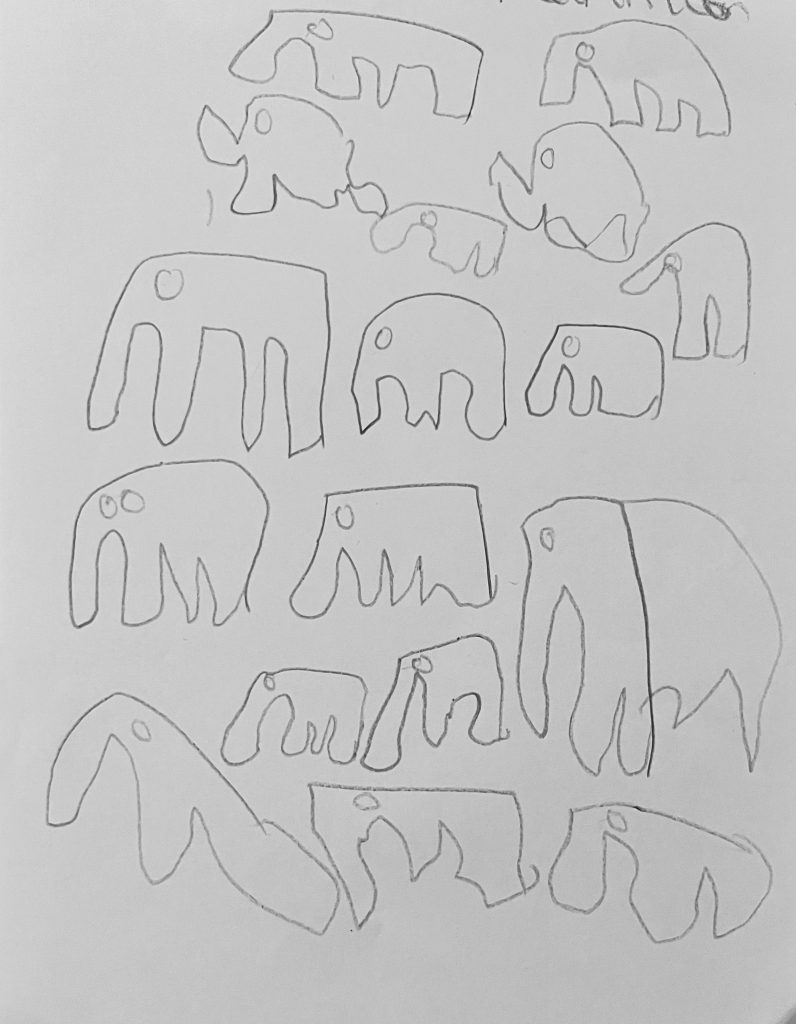
- elephants 3
-
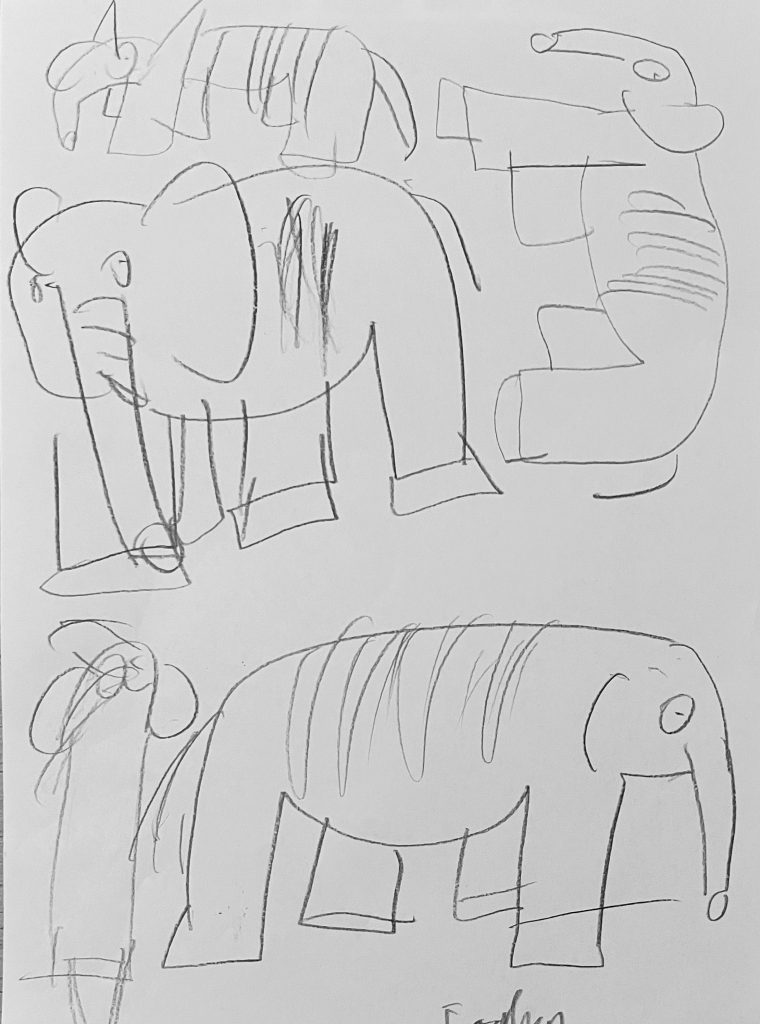
- elephants 4
-
- elephants 5
-
- elephants 1
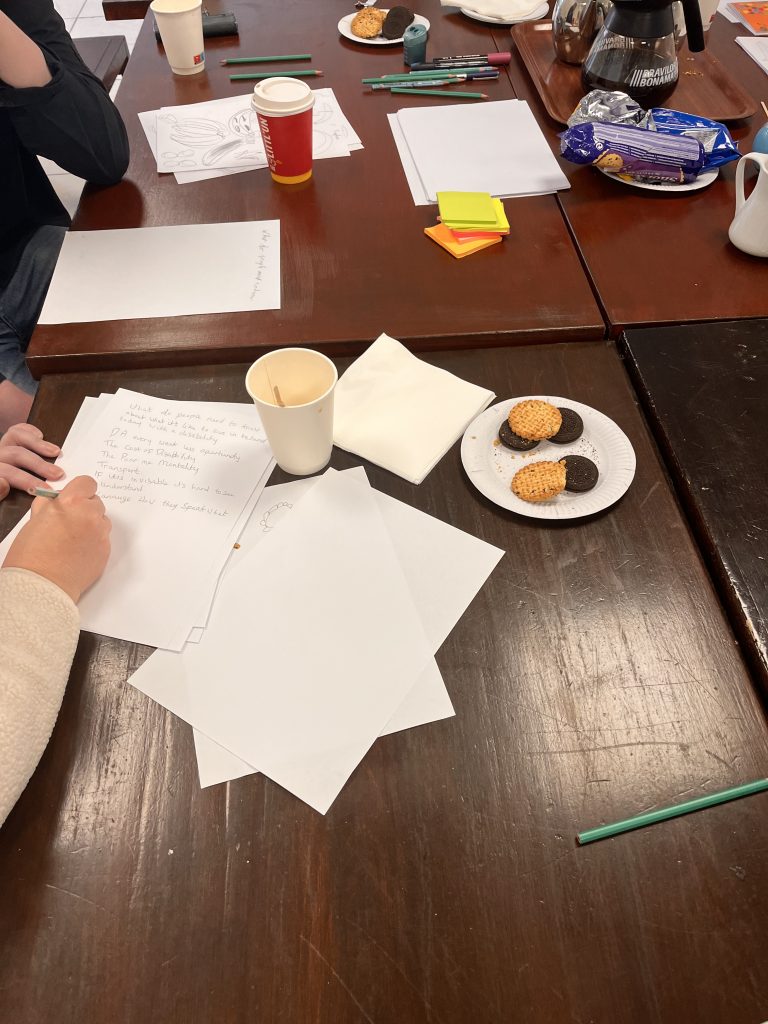
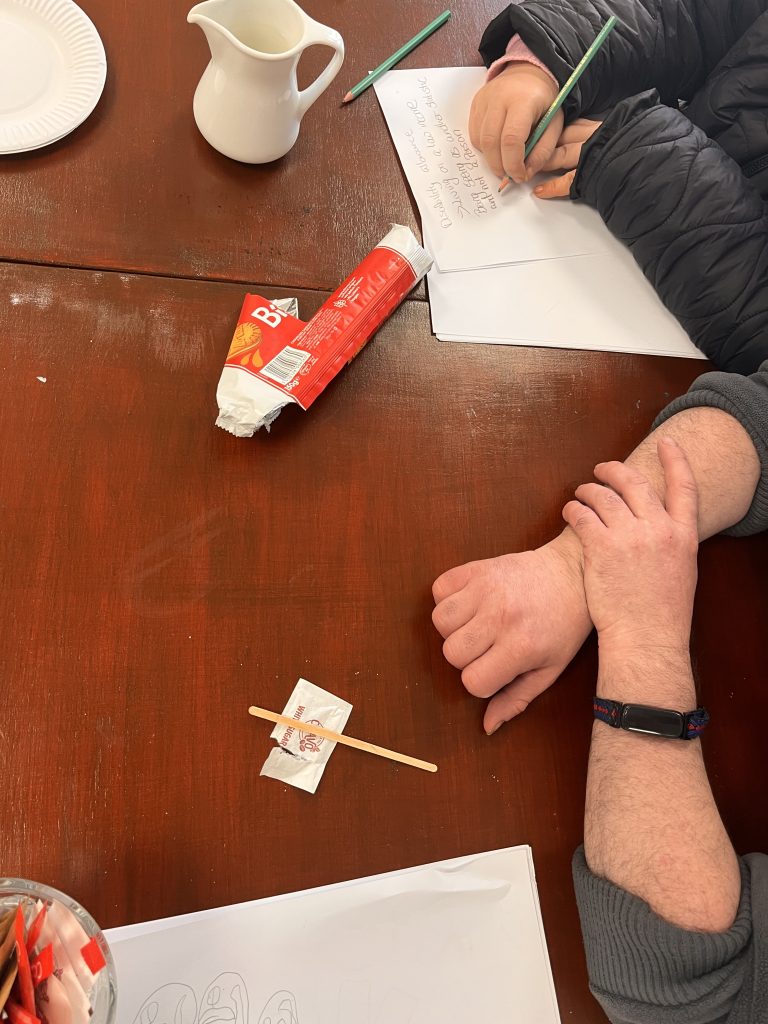
After our warm up work, as mentioned, we moved into group work. I asked them to pair up and have a discussion around what the public doesn’t know about living with a disability in contemporary Ireland. Nice and light topic!
The group partnered up and got talking and writing. The group also kindly allowed me to record the conversation we had, which helped me a lot, as it was a powerful discussion. I was able to transcript the recording afterwords and this has been the beginning of my thinking on how we might construct an installation type art work to culminate the residency.
Clare Crusaders Session 1:
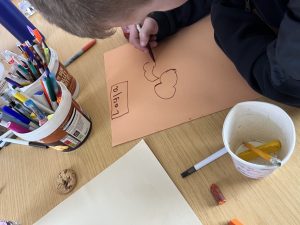
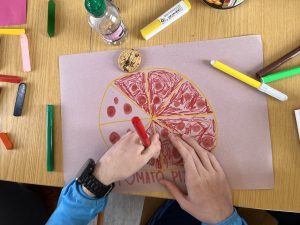
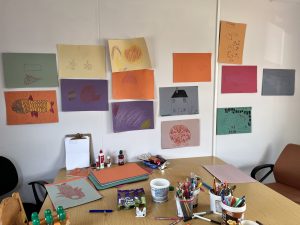
Meanshile, I started working a group of young adults from Clare Crusaders in mid March. I had brought along lots of large sheets of coloured paper, crayons, pencils, felt tips and scissors- my goal was to get to know the group and just have a. fun starter session. All the group have intellectual disabilities and I had met with their parents before hand. Their parents had pointed out to me that these young adults are not going about their days considering what it’s like to be disabled in contemporary Ireland- that their awareness of their ‘otherness’ through the lens of ablesim is pretty much zero. As it absolutely should be. The important thing about this group is that they are a happy bunch of young adults who are for the most part unaware and unbothered by how they are seen by mainstream society. Of course they present with a very different set of needs and expectations than the sessions I am conducting with Clare Leader Forum, who of course, as an organisation, spend a lot of their time campaigning for disability rights.
I explained to the parents that, my goal for this residency overall being to highlight the voices of the groups I had asked to work with, its as important to show the experiences of the young people from Clare Crusaders, who, as said, are mostly unencumbered by the social, environmental and cultural othering other disabled persons sometimes experience. This by no means lessens the importance of highlighting their voices and celebrating their lives. If anything I would consider it even more important to show the public that these young adults lead happy fulfilled lives, full of love and kindness, contrary to the wider public narrative that disabled people deserve pity.
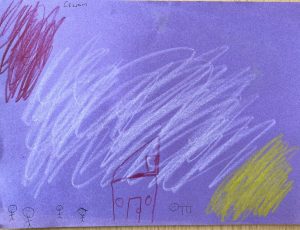
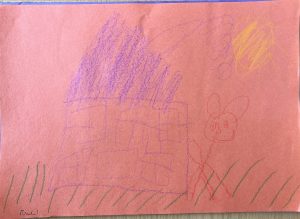
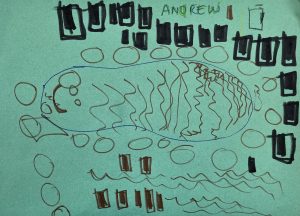
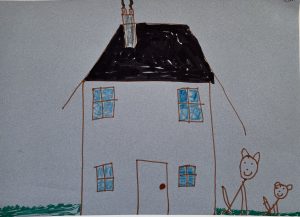
In last weeks drawing session we discussed what makes us happy, what our favourite food is, what our homes look like and who lives in them and if we had pets, and we finished off with tracing the outline of the soles of our shoes and making animals from them. The group were receptive, helpful, good fun to work with and generous with their communication and effort. We have our next session next Saturday.
Images from our first workshop with Clare Crusaders young adult services users.
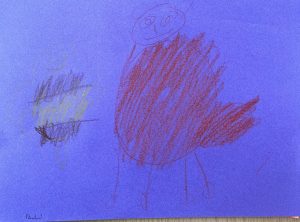
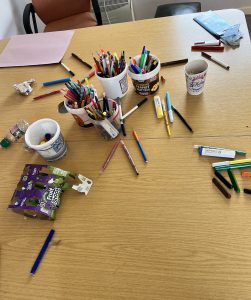
Clare Crusaders Session 2:
Our second session with Clare Crusaders was last Saturday, the last Saturday of March. I was more prepared this time and as promised from the first session, had brought along my Bluetooth speaker so I could play their requested tunes. This went down really well and we did a high octane drawing warm up listening to each others favourite songs. Then while the weather was good we went outside and made life size chalk tracings of each other, and filled them in. This was great and we worked as a team to get this done. See images below. This exercise was to see how we would get on doing further representational work- in session 1 we had drawn our homes, our favourite food, our pets. These life size chalk drawings were to see how the group enjoyed seeing themselves depicted as drawings. The drawings looked really strong, and as the group enjoyed the process it made me wonder might we explore this type of large scale representational drawing further as potential exhibition material.
-
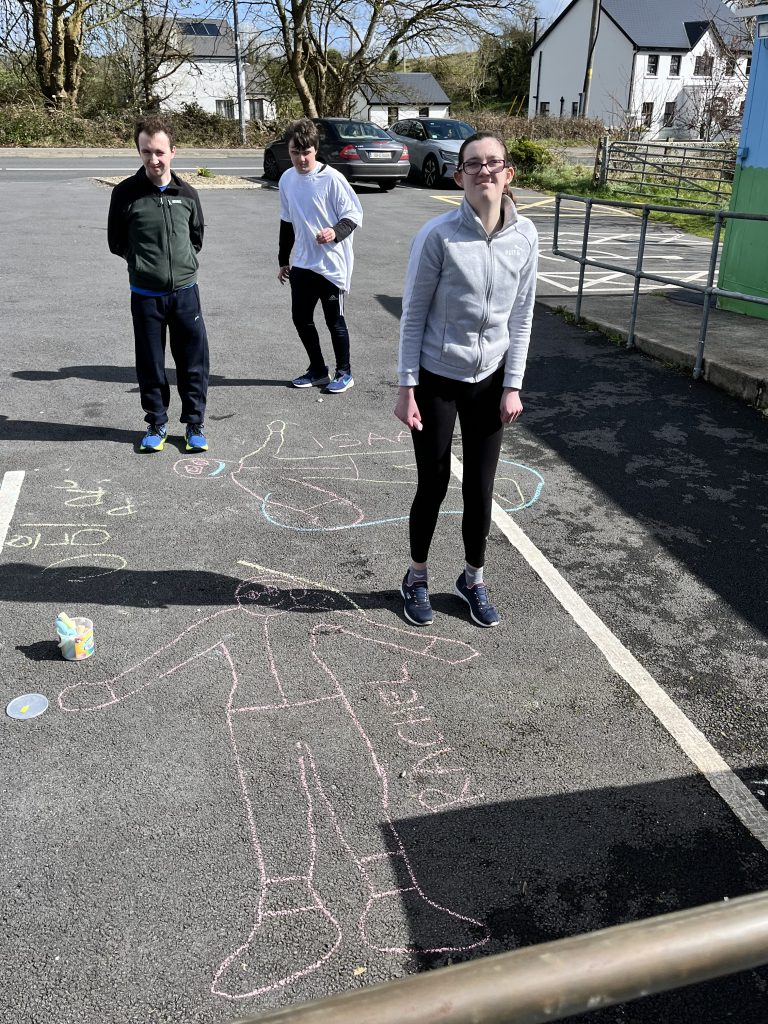
- Rachels chalk drawing
-
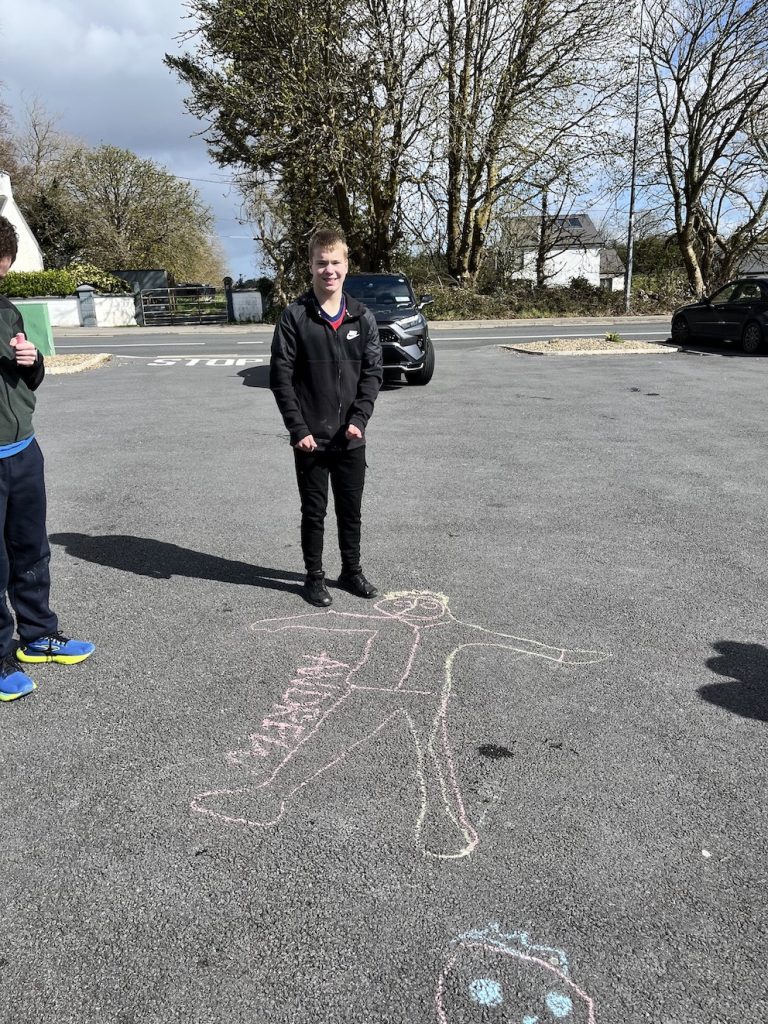
- Andrews chalk drawing
-
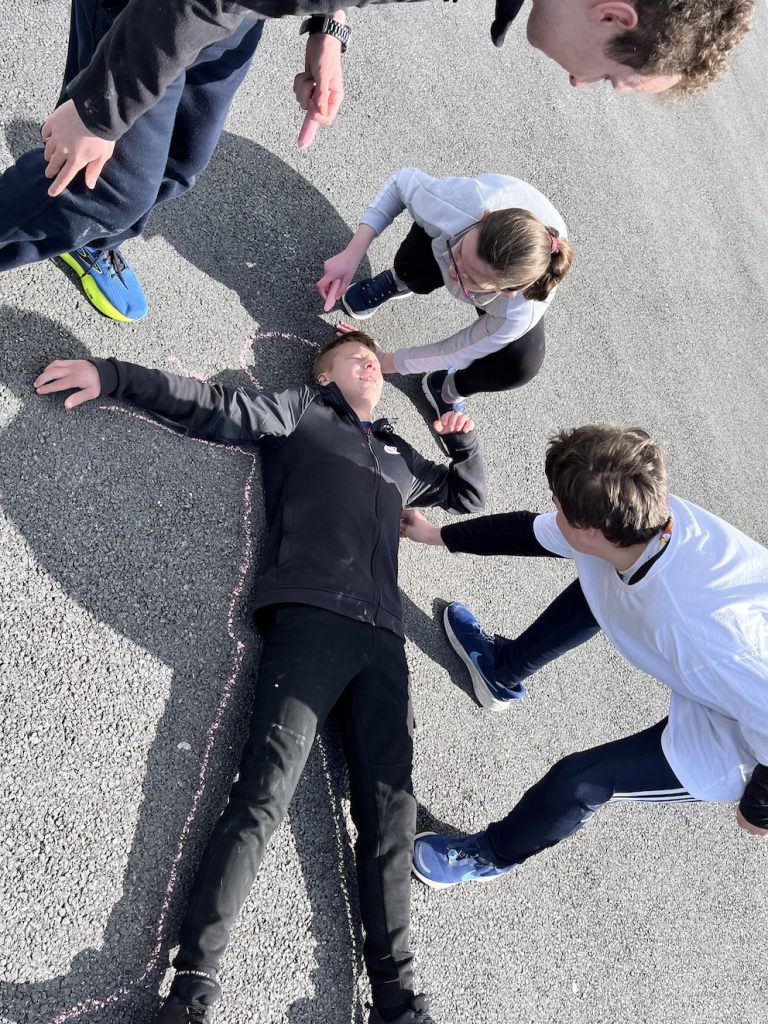
- Andrew getting traced
-
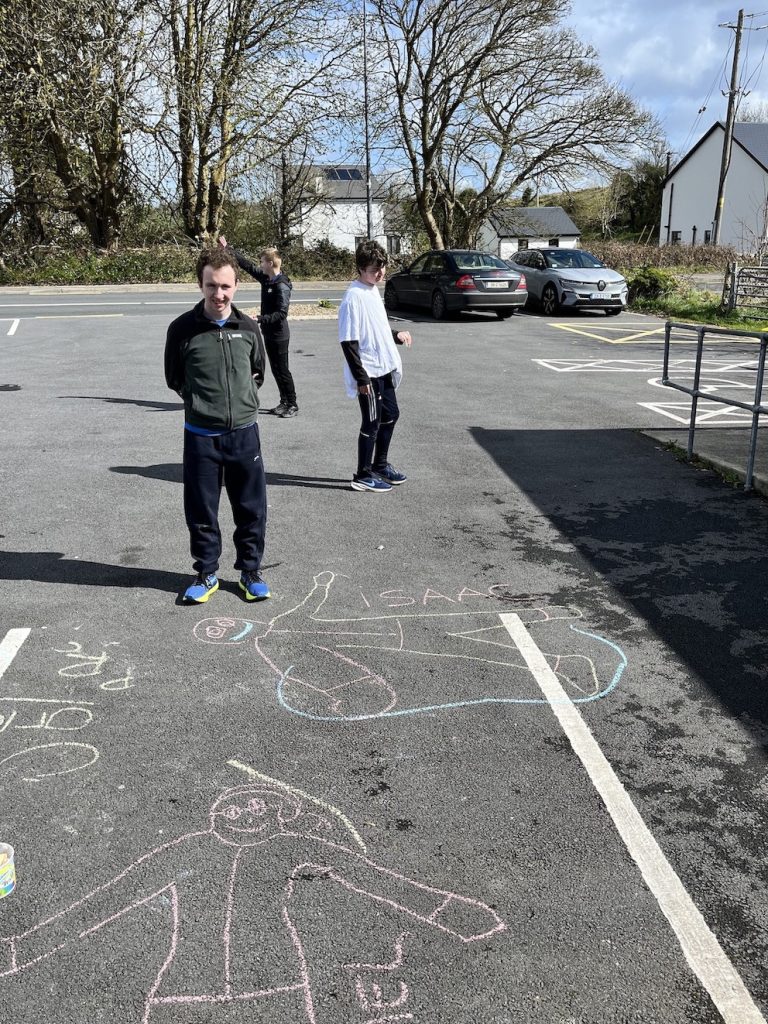
- Isaacs chalk drawing
-
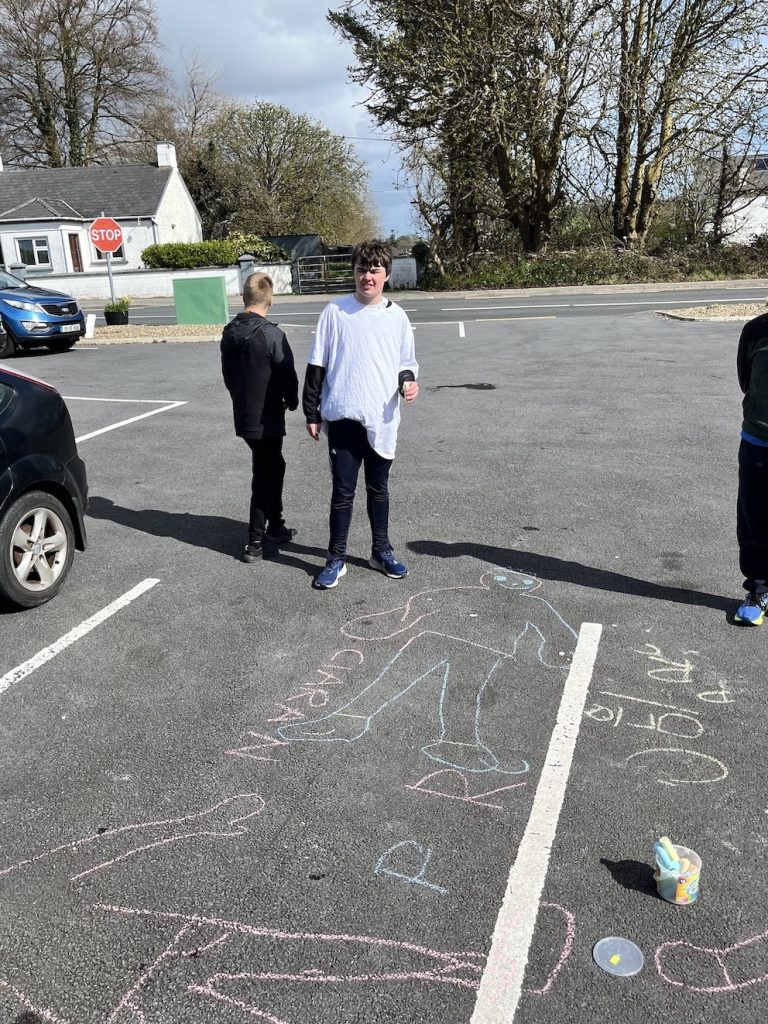
- Ciaran’s chalk drawing
-
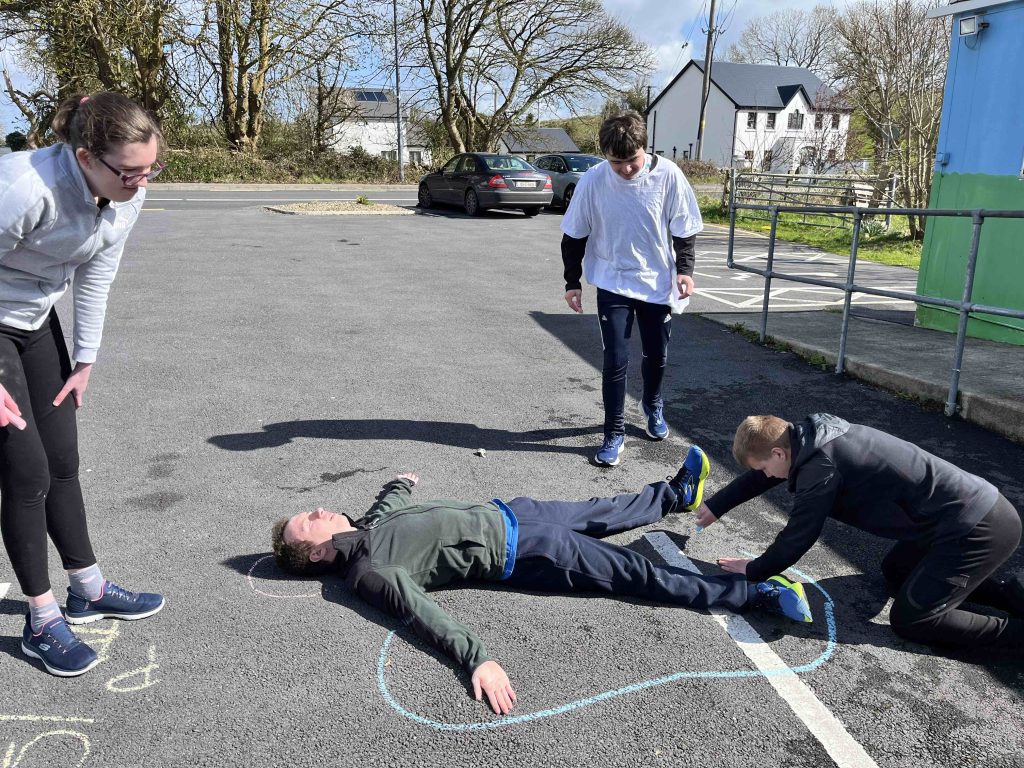
- Isaac getting traced
-
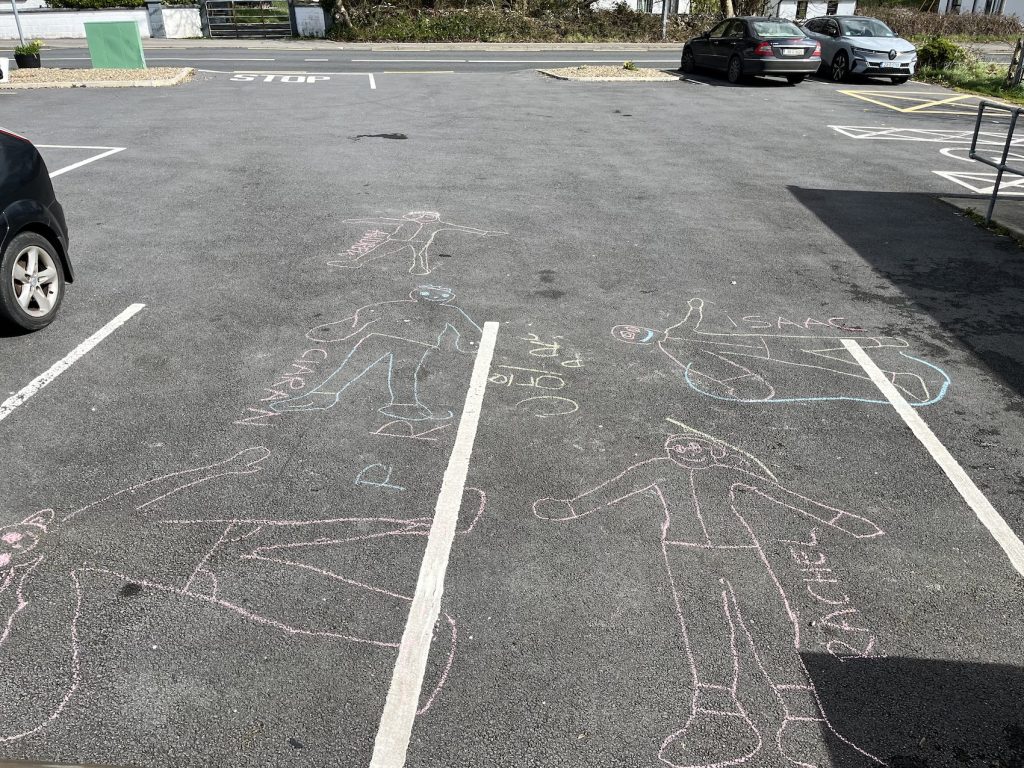
- Finished tracings
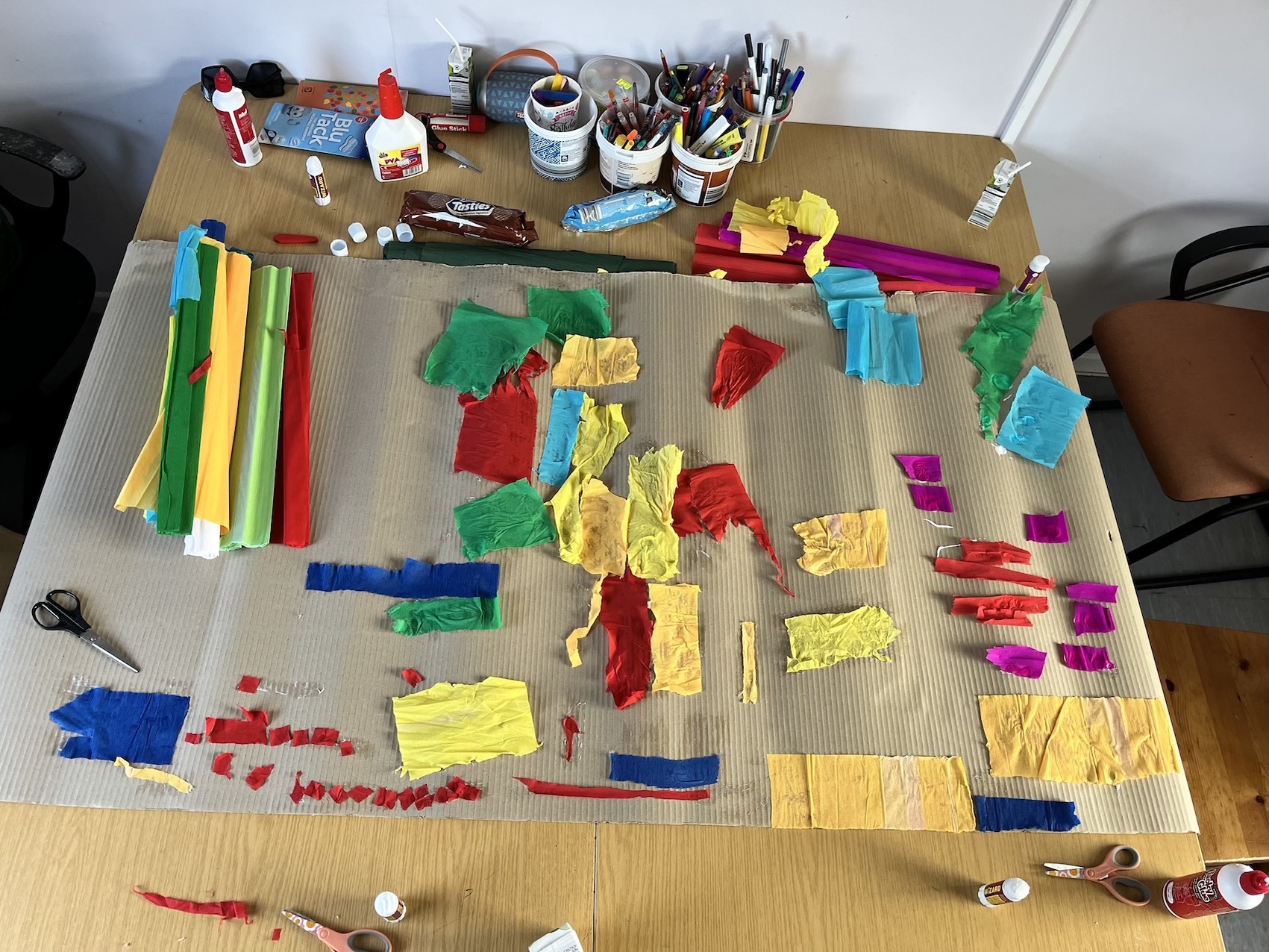
for the second half of the session we started work on a giant collaborative collage, on corrugated cardboard, using coloured crepe paper. I wanted to start a collaborative work that everyone could contribute to on their own terms and at their own pace. The gang like colours and this allowed them to select their preferred colours and tear up or cut off bits of crepe paper to stick on. You can see how far we got below and the different techniques employed by the young people. We will continue working on this after Easter and see if we can cover a larger area and maybe apply paint and crayons also.
Family Carer sessions:
I have also been meeting with family carers- I have had three mid week open studio sessions in glór, and for the most recent two I had invited carers to drop in for a coffee and a chat and to do some drawing. This has been very interesting- I had almost given up on the carer element to the project as I had not had much luck getting carers to engage. This was due to my advertising about the studio sessions on too small a small scale and because of the general unavailability of carers as they are, of course, very busy people. I then tried a different approach- by online advertising and direct emails as to when I would be in glór, and simply inviting people to drop in if they could. The sessions have been very interesting and though provoking so far.
I decided to try to use prompts as a process initially, as I was unsure who would come along and how I would approach it. I had two lovely people, we will call them A and B, attend the first session. I asked them to respond to the prompts below:
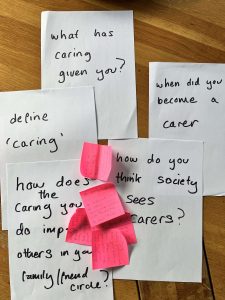
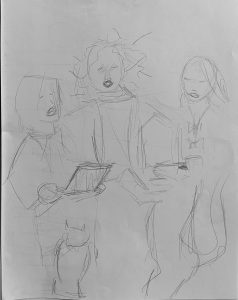
This yielded a very rich conversation and honestly I could have talked to them all day- as a carer myself we found many commonalities but also many differences in our outlooks and approaches. I then asked them to make a drawing to situate themselves in their family. Here is one of the drawings below that were made, which I love. It positions Carer A in the centre of their family- with the kids, dog and cat surrounding them. I love the frantic nature of it :)
The second session was attended by one carer and was again hugely interesting and rich. We went down many conceptual rabbit holes about caring, societal othering, family structures and responsibilities and more. I am going to try advertising the sessions in various shops in ennis as well as online and to do more active drawing in the sessions. I hope to do 2 to 3 more of these drop in sessions.
NEXT STEPS
It is now early April and I am due to hold more sessions over the next two months with each of the three groups.
Outcome: a visual installation?
The challenge is to knit all these learnings and collaborative exchanges and actions into one final visual installation to wrap up the residency and to acknowledge and thank the participants for their contributions. Things I know so far that need to be considered when designing creating this:
interactive– as in it has to ask questions of the audience and there needs to be space/accommodation for the audience to suggest answers within the installation. Possible table with post it notes to add in? or paper to draw on to add to a wall??
multi disciplinary- it will likely combine 2d, 3d work plus performative elements. Ideas I have had based on the sessions so far include constructing a large text based installation, which the groups could potentially walk into the space carrying pieces of text and ‘build’ the installation as a performative element. Or, a large wall based text installation made of drawings. Or one big drawing, made of a combination of the drawings that will have been done over the different sessions, that come together as one element and contain a question. Spoken word performance on the opening night could also be an option.
Hybrid– there could be different stages to the installation. It opens and starts in one formation. As the week of the installation progresses, it could added to and changed (possibly by audience additional interactive material/potential to rearrange text elements) so that by the end it is a different installation to the initial iteration.
collaborative: most important all of the above needs to be done with the agreement and creative input of the various groups. The ideas above are partially mine and partially inspired by things that have happened in the sessions.
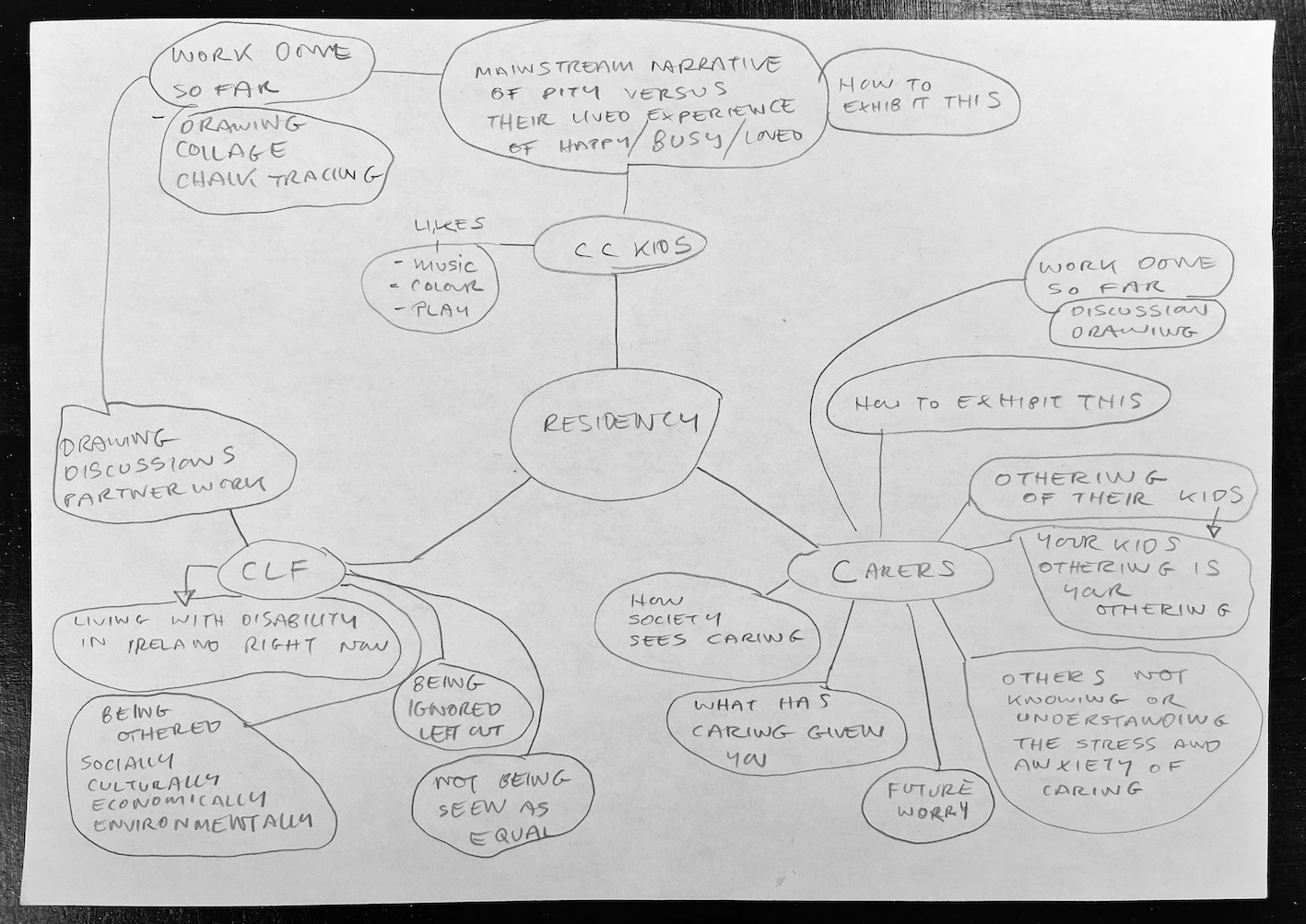
Bit of mind mapping below to help streamline this morning at glór- early April.